Before
Fragmented and unoptimized
Offers
Low CTR
Low conversion
Ads
Poor reach
Irrelevant
Landing pages
High bounce rate
Cluttered
Media buying
Inefficient spend
Manual
What we do
Advertisers arrive with an offer. Publishers arrive with traffic. Both usually arrive with a stack that was never designed as one system. The hub is the middle of that system.
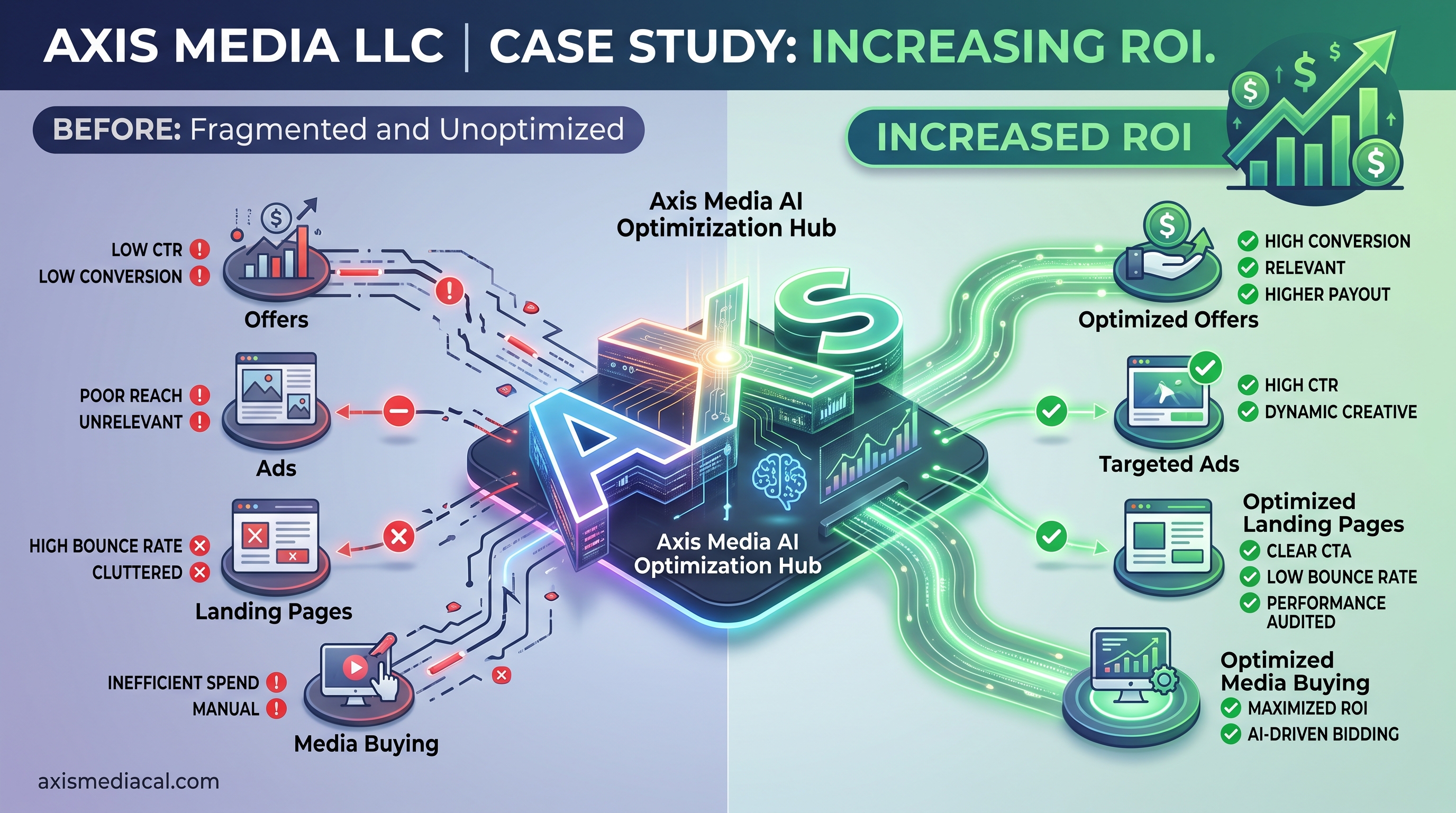
Before
Offers
Low CTR
Low conversion
Ads
Poor reach
Irrelevant
Landing pages
High bounce rate
Cluttered
Media buying
Inefficient spend
Manual
AI optimization hub
After
Optimized offers
High conversion
Relevant
Higher payout
Targeted ads
High CTR
Dynamic creative
Optimized landing pages
Clear CTA
Low bounce rate
Performance audited
Optimized media buying
Maximized ROI
AI-driven bidding
Models help with bid pacing, creative variants, and flagging a page that no longer matches the ad. A person still decides whether an offer is honest enough to send traffic to.
01
Payout, caps, geography, source of the click, and whether the page can close. If those do not line up, we say so before spend starts.
02
Irrelevant creative and a cluttered page are the same leak seen from two sides. The hub treats them as one job.
03
Manual habits come out. Bidding follows a rule. Dynamic creative is allowed only when it still matches the offer.
04
What changed, what it did to CTR, bounce, and payout, and what we will not repeat. The desk does not run on memory.
We are not a login full of unscreened offers, and we are not a creative shop that leaves after the files. The desk stays on the return.